I Was Told I Couldn’t Sing BUT Was That Actually True?
“Oh, I can’t sing.”
I can’t tell you how many times I’ve heard those words and when I ask the person how they know they can’t sing, something interesting often happens.
They don’t tell me about years of singing lessons that didn’t work. They don’t tell me that they carefully explored their voice with an experienced teacher and discovered it was hopeless.
Instead, they tell me about something that happened years ago.
“My teacher told me to mime in assembly.”
“My mum said I sounded awful.”
“I auditioned for the school choir and didn’t get in.”
“Someone laughed at me.”
One comment. Sometimes one careless sentence said when they were seven or eight years old.
And somehow:
“I wasn’t very good at singing then” became “I can’t sing.”
For some people, that belief lasts for decades.
But was it actually true?
In more than 35 years of teaching voices, I’ve worked with complete beginners as well as experienced singers and professional performers and one of the things I’ve learned is that there’s an enormous difference between:
“I can’t sing”
and
“I haven’t learned how to sing yet.”
Singing isn’t magic.
Your voice is an instrument housed inside your body, and learning to sing involves developing a surprisingly sophisticated set of physical, aural and neurological skills.
We learn to coordinate breath and sound to recognise and reproduce pitch, we develop range, we learn how to move between different areas of the voice, discover resonance.
We develop strength, flexibility and stamina.
And, importantly, we learn how to listen.
These are skills.
And skills can be developed.
So what did “you can’t sing” actually mean?
Perhaps you struggled to match a pitch when you were eight.
Or the song was too high or too low for your voice.
Perhaps you had no idea what you were supposed to do physically.
Or you couldn’t hear the difference between the note being played and the sound you were making.
Perhaps you were frightened.
Perhaps somebody compared your completely untrained voice with another child’s naturally confident one.
Or you simply hadn’t learned yet.
None of those things means:
You cannot sing.
It means that, at that particular moment, you couldn’t yet do something you hadn’t been taught how to do.
We don’t normally tell a child who falls off a bicycle on their first attempt that they are fundamentally incapable of cycling
Yet somehow we have done exactly that with singing.
“But I’m tone deaf.”
This is another phrase I hear regularly.
True congenital amusia is a neurological difficulty affecting the perception of musical pitch and it does exist.
But struggling to sing accurately doesn’t automatically mean you’re tone deaf. Pitch matching itself is a coordination skill.
You have to hear a sound, process it and then coordinate your vocal mechanism to reproduce it. Some people can do this instinctively from a young age. Others need help learning the process.
The speed at which you learn something isn’t a measure of whether you deserve to do it.
You’re not eight anymore
This is the part I wish more adults understood. The voice you have at 40, 50, 60 or 70 is not the voice you had when somebody made that judgement about you.
Your body has changed. Your voice has changed. Your understanding has changed. Your ability to concentrate, practise and follow detailed instructions has changed.
And now you can make a choice your eight-year-old self couldn’t make.
You can decide to learn.
I’ve seen adults arrive for lessons almost apologising for being there.
They tell me immediately that they’re “not singers.”
They’re nervous about making a sound in front of me.
Some have spent forty or fifty years singing quietly in the car, joining in only when nobody can hear them, or wishing they had the courage to do something they’ve secretly wanted to do all their lives.
What I usually discover isn’t the absence of a singing voice.
It’s an untrained voice accompanied by a frightened person.
And those are two things we can work with.
Learning to sing is about more than producing the right notes
Of course technique matters enormously.
I’m a singer and voice teacher. I care about how voices work.
But something else happens when an adult who has spent years saying “I can’t” begins to discover that perhaps they can.
They start smiling more. They stop apologising before making a sound and become curious about what their voice might be capable of.
Then comes the first song.
The first time they sing in front of someone else.
The first performance.
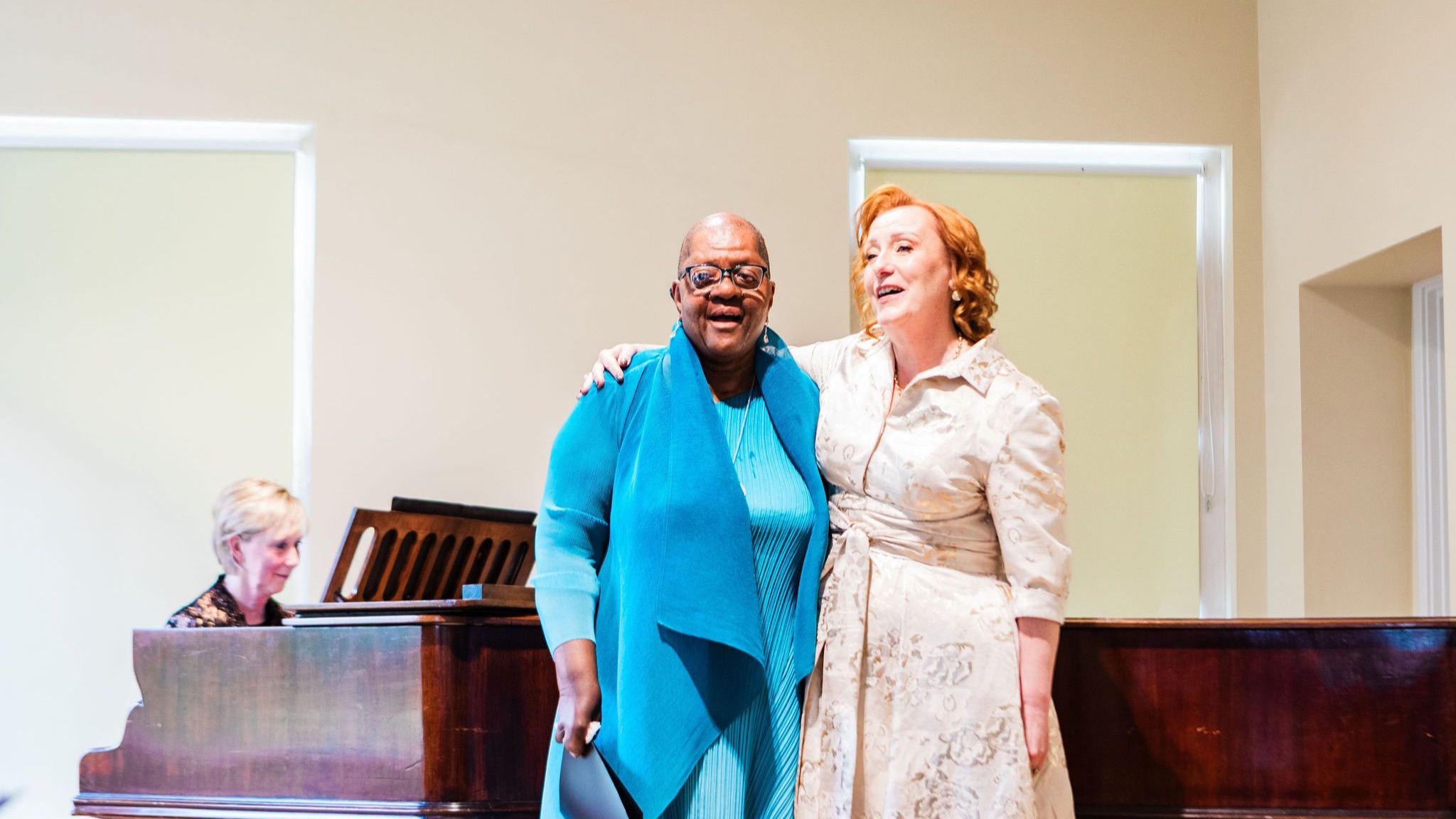
And sometimes, eventually, the moment they walk onto a stage and do something their younger self would never have believed possible.
That’s one of the reasons I created Diva Energy® and my From First Note to Final Curtain mentorship.
I’m fascinated not only by teaching someone how to sing, but by what happens when a person finally gives herself permission to become a singer.
Because you don’t have to have started at six or have been the star of the school choir.
You don’t have to be able to read music and you certainly don’t have to spend the rest of your life obeying a judgement somebody made about your voice decades ago.
So, can everybody become an opera singer?
No.
Just as not everyone who learns to run will become an Olympic athlete.
Our voices are individual instruments. We have different physiology, different ranges, different musical instincts and different potential.
Good teaching isn’t about promising that everybody can become anything.
It’s about discovering what your particular voice can do.
And you may be very surprised.
So if you’ve spent years saying:
“I’ve always wanted to sing… but I can’t.”
I’d like you to ask yourself one question.
Who told you that?
And perhaps an even more important one:
Were they actually qualified to decide what your voice could become?
Maybe the question was never:
“Can I sing?”
Maybe it’s:
“What might my voice become if, for the first time in my life, somebody actually taught me how to use it?”
And I truly believe that’s a question worth answering.
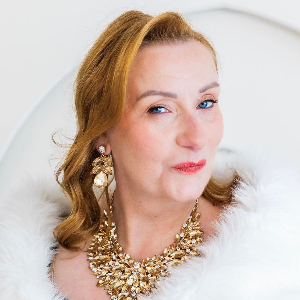
Julie Bale is a professional soprano, voice specialist and founder of Diva Energy®. With more than 35 years’ experience teaching and developing voices, Julie works with adults who have always wanted to sing from complete beginners to experienced performers.
Her six-month private mentorship, From First Note to Final Curtain, combines individual vocal development, performance training and real performance experiences, taking singers from discovering their voice to stepping onto the stage.
Hey!